Laying is the core of the business
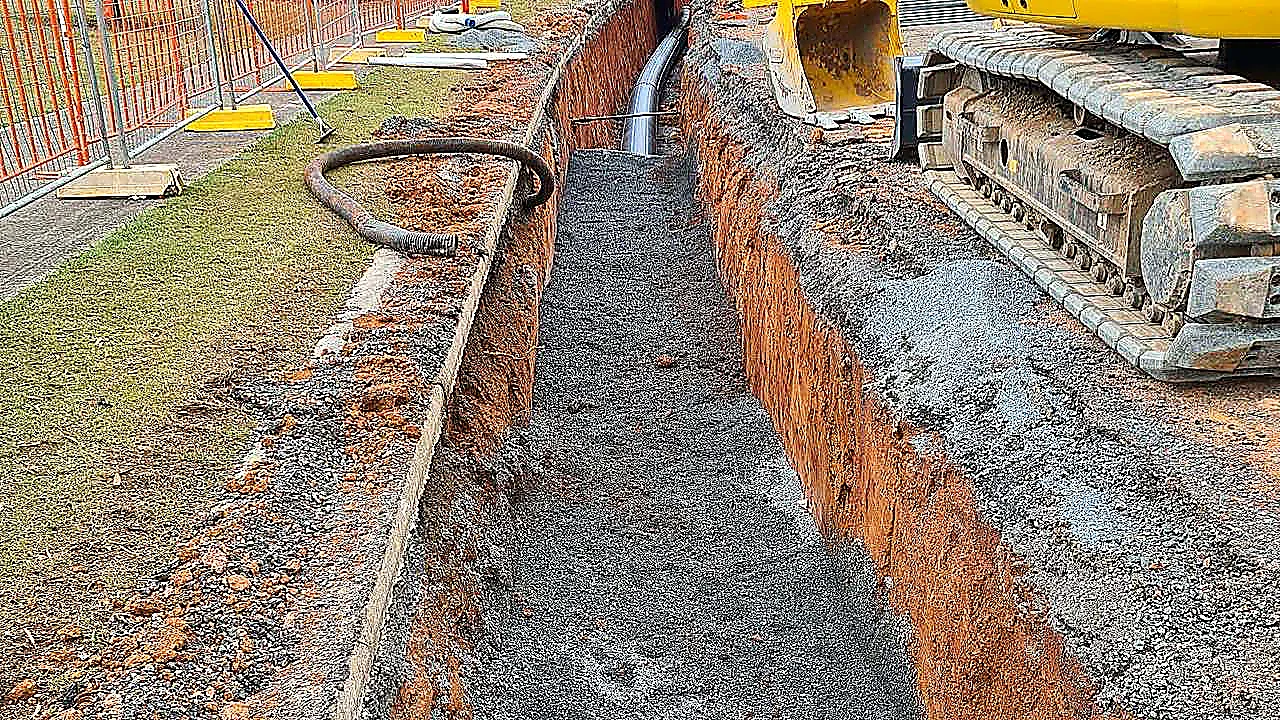
This is the trade currently paying the bills: laying underground pipe for a principal contractor who already has the equipment, the HR team and the work. We bring the laying — bedding, line and level, jointing, testing and backfill — on utility water infrastructure and on John Holland’s Beerburrum to Nambour (B2N) rail upgrade.
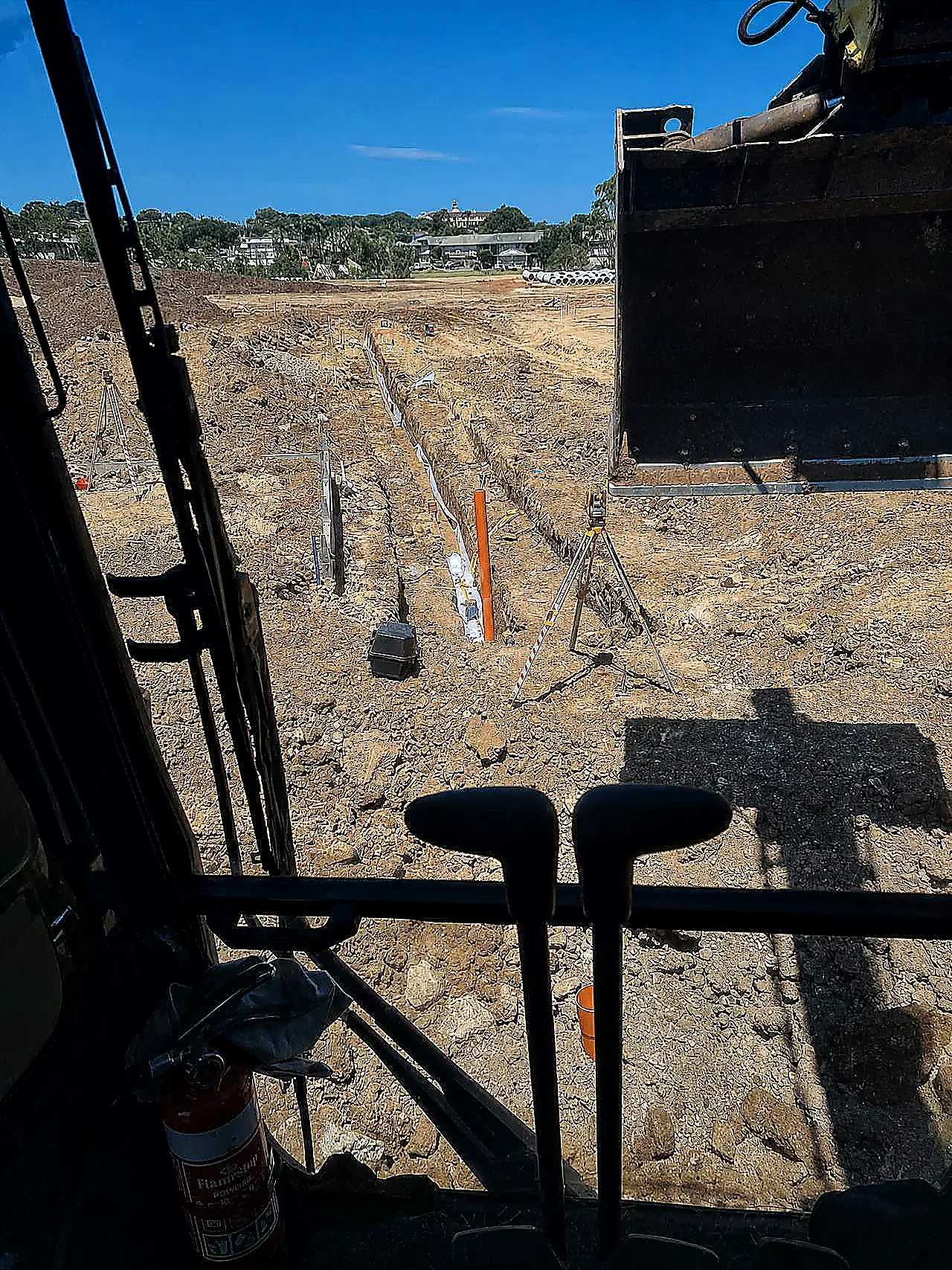
Gravity sewer and stormwater drainage have to fall. Pressure mains have to hold. Either way the invert is set with a pipe laser, the haunching is compacted, and the joint is made so it still holds when the trench is full of Queensland clay and a roller is on top of it. That work happens in a protected excavation — benched or battered faces, or inside an engineered shoring box — not in an unsupported cut.
What we lay
- Potable and recycled water mains
- Gravity sewer and rising mains
- Stormwater drainage systems and culverts
- PVC, DICL, PE, RCP and fittings
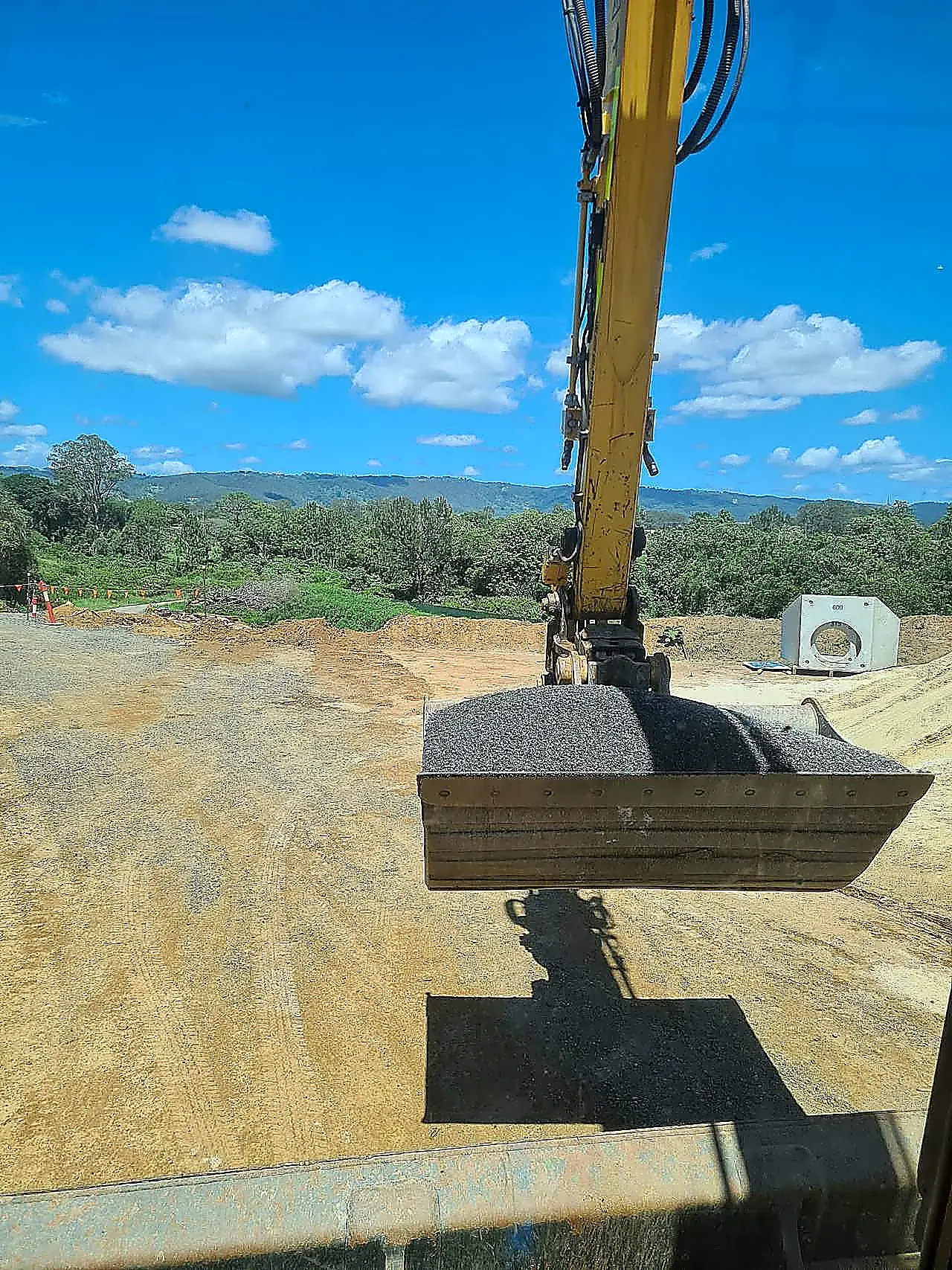
- Bedding, haunching and select fill
- Laser alignment, jointing and deflection
- Lay in a benched, battered or boxed trench
- Thrust / restraint and connections
- Pressure / air / ovality testing and as-builts
Why principals keep us on
Underground work is slow to fix and expensive to argue about. Principals want a civil pipe layer that already knows live services, rail corridor rules and water-utility hold points — not a labour hire name on a docket. That is the advertising: years on the tools, currently on major SEQ infrastructure — digging, laying and concreting as one crew.
The trench starts with digging and is locked in with concreting.